Blog


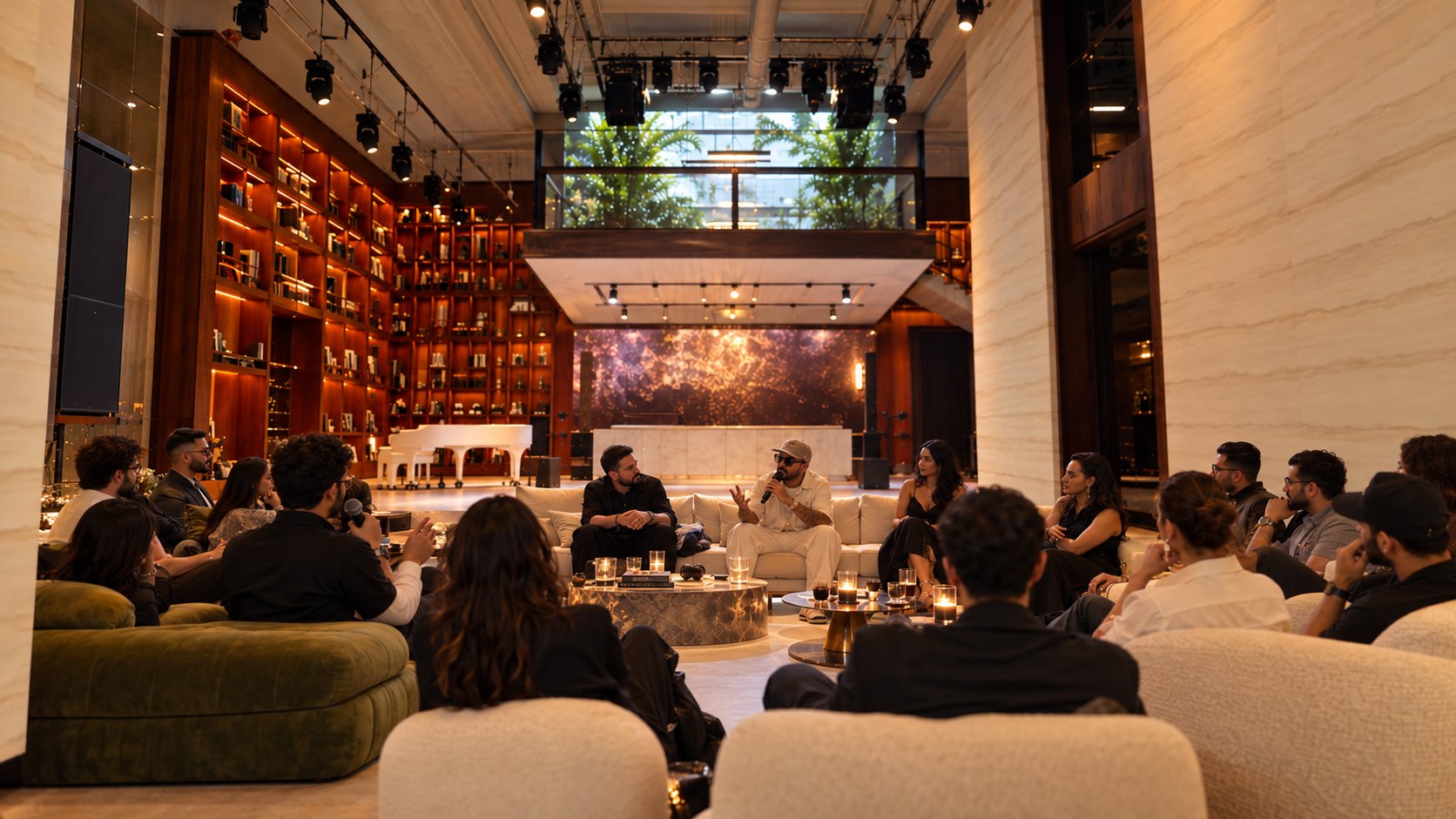
After months spent making a record, artists deserve an evening where guests hear the songs in their intended order and have time to discuss what went into them. For an album listening party in Dubai, the most useful preparation happens between the artist and the person responsible for playback. Together, they decide how the music will run and where conversation belongs. Someone’s House hosts private album debuts in Al Quoz, where an invited group can hear a record together and stay for a meal or an artist conversation.
Someone’s House has a residential interior that suits an evening spent with the people behind a record, particularly when the guest list includes friends and collaborators. In the House’s design account, Alper Alhan’s work retains the former garage’s character alongside finished wood and domestic furniture. Books occupy a double-height library wall. For a listening evening, use the seating as the starting point for the guest layout and discuss artwork placement with the House team.
The artist’s preferred listening order deserves the first production conversation, especially when one song continues into the next or a soft passage follows a louder track. If the album was conceived as a complete work, continuous playback lets the audience hear its relationships. For a discussion between songs, prepare exact stops with the artist ahead of the event. Once those stops are agreed upon, the host can develop questions around the music the audience has heard.
The unreleased album may have reached only a few trusted collaborators, so the private preview opens a conversation with people hearing the finished recordings for the first time. Guests who followed its creation will recognize decisions that newer listeners hear as part of the finished work. Leave space for both responses in the discussion. The invitation can explain how guests will participate, particularly if the artist wants written comments to consider afterward.
Once the album’s duration is known, the host can build the evening around a listening appointment for guests to attend. Food fits into the arrival period ahead of the first track. When confirming attendance, state when playback begins and how long the album runs. Use the actual running time when preparing the invitation.
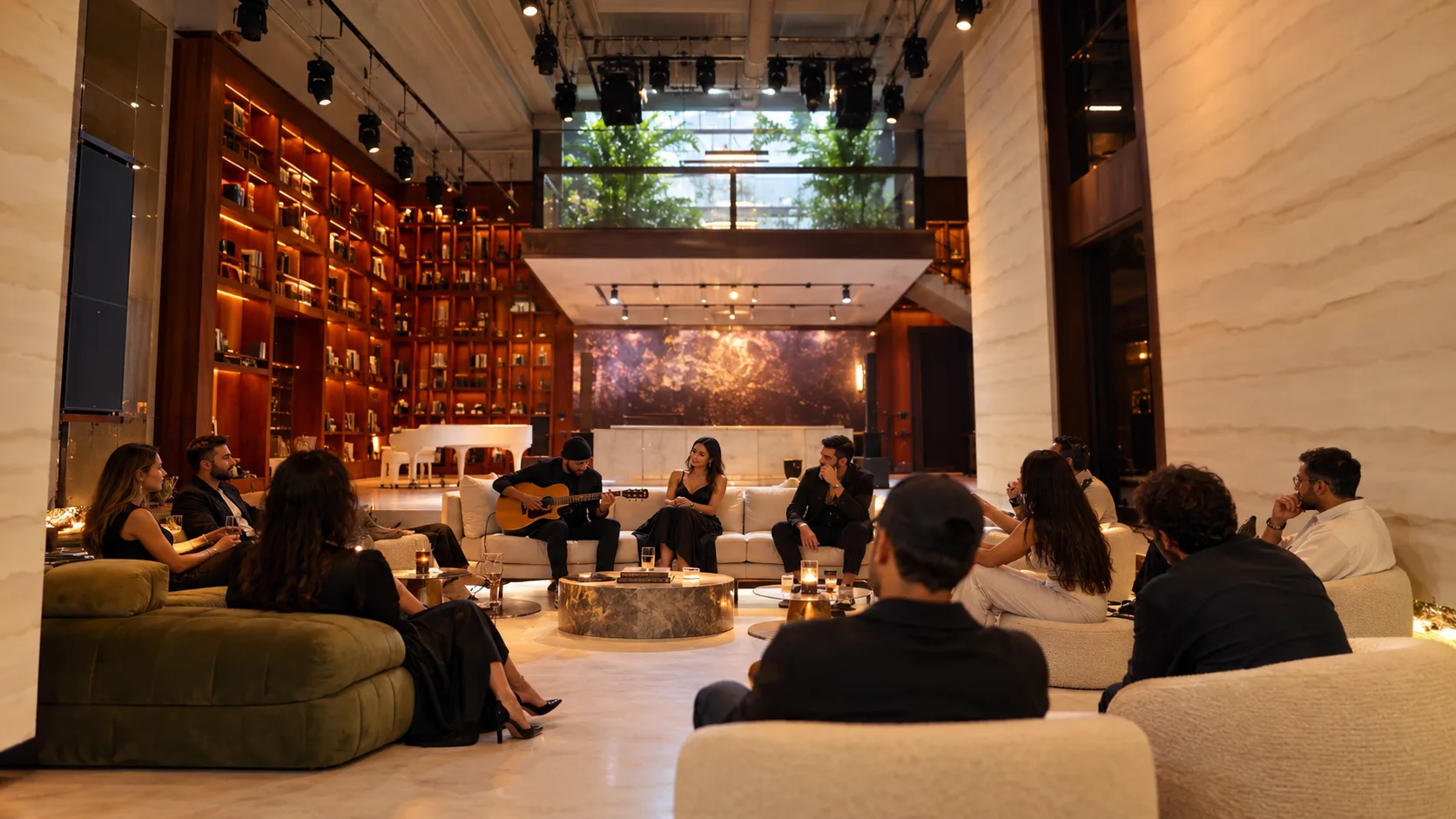
Approved final files allow the playback operator to rehearse the entire album using the proposed system; the rehearsal covers the transitions the artist expects between adjacent tracks. Ask the artist’s team to identify the release version and supply its running order. If several exports exist, the filenames need to distinguish the approved version from earlier mixes. Keep the selected files together in the operator’s working folder and prepare a separate backup for the same playback arrangement.
Listen to the complete album on the intended player ahead of the guest's arrival, so any unexpected pauses or incorrect files become apparent during preparation. The artist or a trusted collaborator needs to approve the sound of the transitions. For songs connected by continuous audio, check the join between the files as part of that test. Playback software settings deserve the same attention as the files, particularly automatic transitions or volume adjustments that affect the artist’s approved recording.
Someone’s House’s current equipment inventory lists a Yamaha DM7 COMPACT digital mixer and L-Acoustics SYVA loudspeakers. Confirm with the event’s technical team which system will carry the album and how the playback device will connect to it. Yamaha’s published specifications confirm support for USB audio input and output. Test the actual connection and software configuration with the proposed playback computer during the event’s technical check.
The most useful sound check takes place from the positions where guests will hear the record, with the proposed seating already arranged for the evening. Ask the technician to play a section containing a softer passage from the album and another with the fullest arrangement. Someone familiar with the recording can identify a missing musical detail or an unexpected change in balance. The technician then assesses the event setup against the artist’s reference and the venue’s operating requirements.
Sofas create an informal space to listen to a record together, yet their placement still warrants a sound check with the evening’s seating in place. Review how guests will reach their seats during arrival and where the artist will sit for the discussion. If a wheelchair user is attending, discuss a suitable position with the venue during planning. Confirm attendance against the approved layout and keep its circulation routes available throughout the event.
Music deserves enough uninterrupted time for listeners to hear a soft opening or the space at a song’s end, so the hospitality team needs its own place in the schedule. Plate and glass collections are better handled during the reception or at an agreed-upon interval. For a continuous album presentation, the hospitality team needs the exact start and finish times. After the final track, a meal provides a useful setting for the artist to hear individual reactions from guests who prefer a smaller conversation.
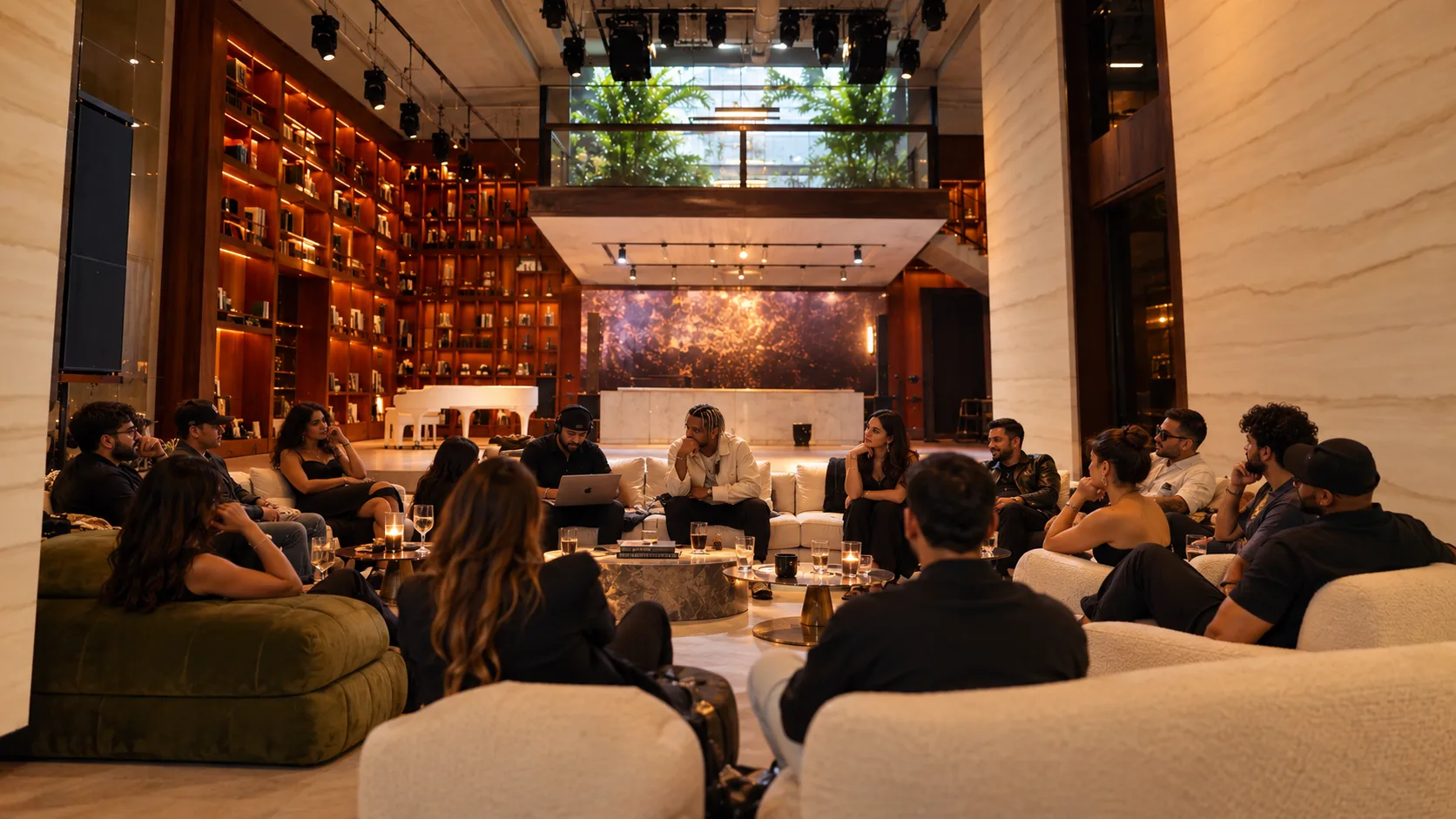
The person hosting the discussion needs to hear the album in advance and ask the artist which creative decisions they are comfortable discussing with the invited audience. Useful questions often concern a specific detail: the reason a song opens with a particular instrument, or how its lyric changed during recording. After hearing the passage, guests have a specific reference for the artist’s answer. Leave the longer biographical information in the invitation material.
When a producer joins the discussion, agree with the artist on which recording stories belong in that conversation and how the two speakers will participate. The host might ask the artist how a song began, then invite the producer to explain a particular recording decision. Questions from guests deserve their own time after that exchange. If the artist wants to replay a passage, send the track name and start point to the operator ahead of the discussion.
Personal lyrics sometimes invite questions the artist prefers to discuss privately, so the host benefits from a conversation concerning sensitive material during preparation. Guests still need space to ask their own questions. Once an answer has reached its limit, the host can return to a musical decision discussed during preparation. Any promised follow-up, such as a production credit or a release date, needs confirmation from the artist’s team.
Album artwork has a natural place at a listening party, particularly when the visual identity was developed alongside the music and the artist wants guests to see that relationship. Someone’s House’s inventory includes an LED display, whose event setup should be agreed upon with the technical team. Supply approved artwork at the requested dimensions and test its appearance on the screen. Fine lettering deserves a check from the proposed seats, especially if guests will be reading lyrics or recording credits.
If the artist has commissioned a film for a particular song, decide whether it belongs inside the album playback or in a separate presentation after the music. Supply the approved video file with instructions for its audio playback. Compare the film’s soundtrack with the intended album version in rehearsal, so the team knows exactly what the audience will hear. For static artwork, a sustained image often leaves listeners free to concentrate on the recording itself.
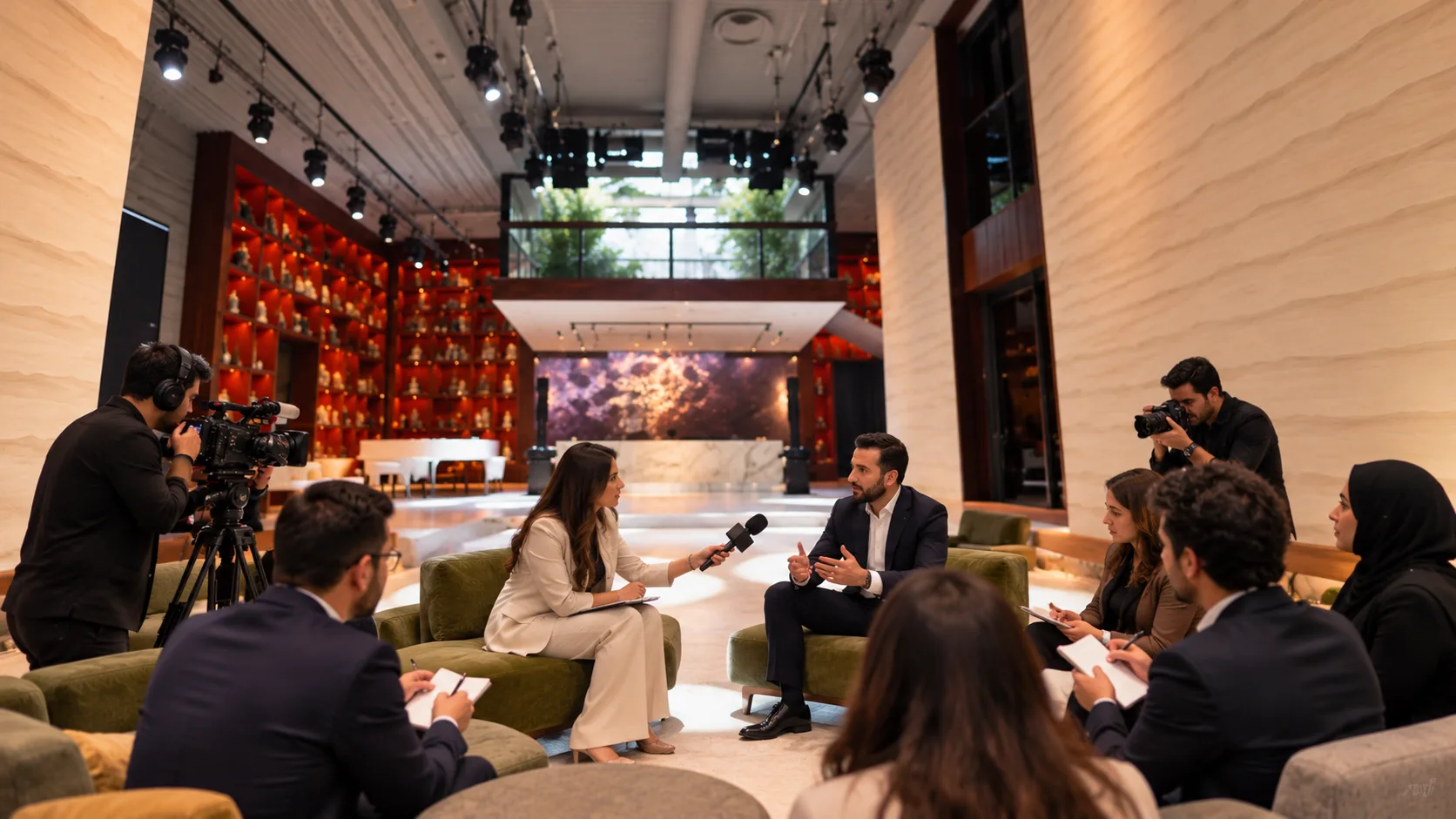
Photographs from a private preview may circulate ahead of the music, so the artist’s release plan should address audience recordings and approved images. State the agreed conditions in the invitation and repeat them in the welcome. If selected photographs are approved for publication, identify the person who will supply them and when they become available. For a planned release embargo, the artist’s team needs direct agreement from the invited media concerning the date and time zone.
Dubai DET’s event permit information lists entertainment events as activities requiring a permit, so the proposed album evening needs a classification review with the organizer. DET separately describes private activity notifications for private events that generate zero financial gain for organizers. Confirm the appropriate route against the actual event and its commercial purpose. The organizer needs to describe any artist's performance when seeking that confirmation.
Someone’s House’s booking information specifies a reserved block of hours, which means the technical preparation and final guest departure need to fit the confirmed reservation. Include the playback test when discussing access with the team. If the artist plans to stay for dinner, allow that conversation enough time after the album. Food arrangements are reviewed against the event brief, and any requested culinary support is confirmed during the booking discussion.
Send the proposed date and expected attendance through the House booking page, with a description of how the artist wants the evening to run. The team can review the listening setup against that plan. Friends who helped make the record might stay for dinner; invited media may need time with the artist after playback. Reserve enough time for the people whose conversations the release deserves.