Blog


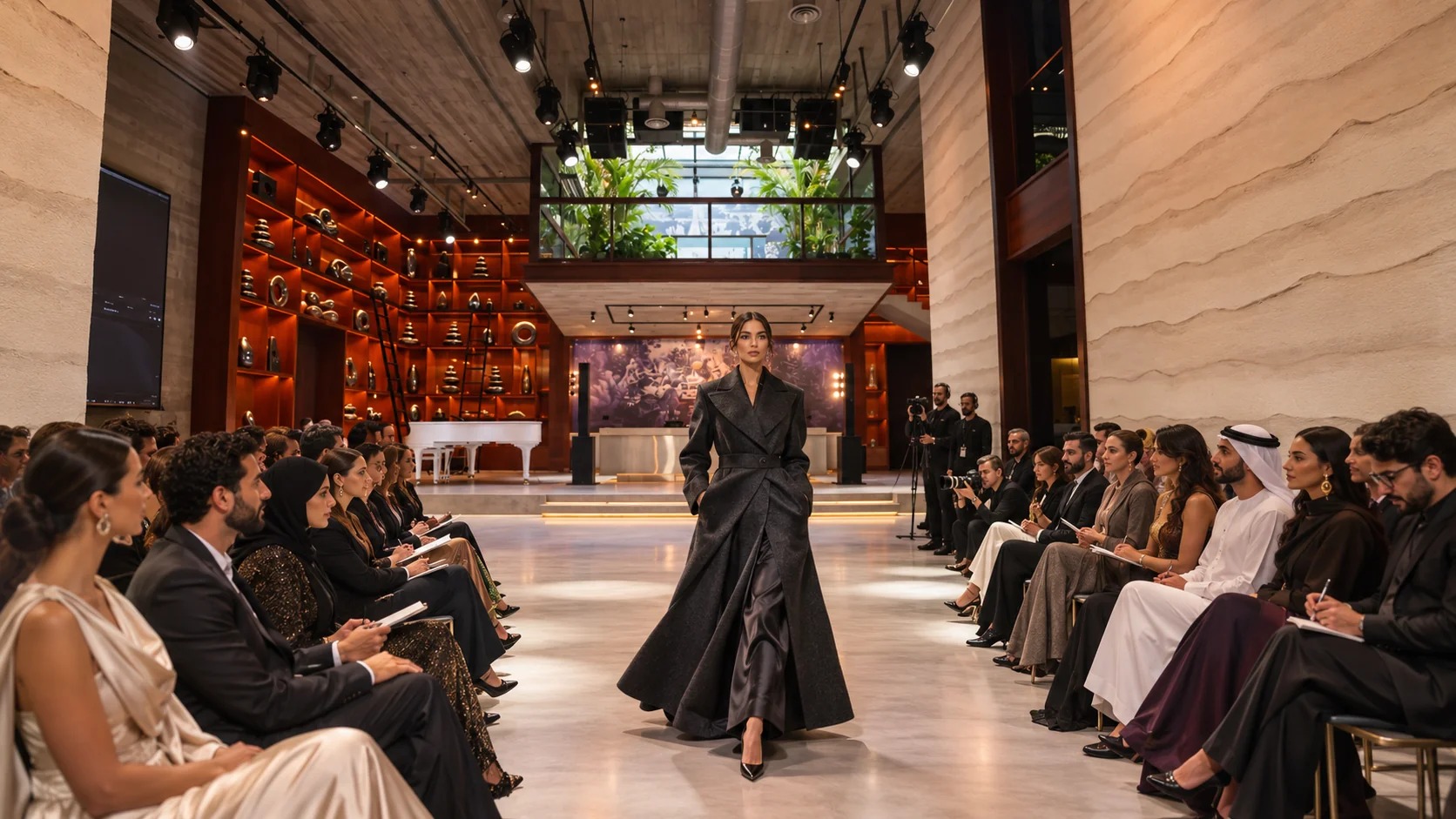
Check runway views at seated eye level and plan the crew route for a private fashion show at Someone’s House, a full-day venue in Al Quoz, Dubai.
The floor plan can make nine seats look equal until someone takes the corner chair and sees the photographer’s shoulder where the shoes should be. Producers inspecting a private fashion show venue in Dubai get better answers by walking the model route and testing the view from guest chairs. Follow the path in the shoes selected for the collection, then repeat the exercise with the final chair positions in place. The first fitting tells the designer how the fabric behaves in motion. What guests see depends on the view from their own chair.
Runways with a straight path suit a collection whose details read head-on, especially if the photographer needs a consistent frame for a series of full-length looks. Place the turn where the far-end guest can see the garment’s front for the full pause. For draped pieces, test a look with a long hem on the planned surface at show pace. Allow space for the model to finish the turn and adjust the next entrance cue if the two walks overlap.
Certain pieces warrant a brief pause at a recognizable point on the path, particularly when buyers need to see a fastening or the sleeve’s shape. Near the runway’s head, the pause works for a front-facing camera; closer to the center, guests on both sides may have a better view. Let the designer pick the detail that deserves that pause and ask the camera operator to frame it from the intended position. Use the cue sheet to record the agreed point for the look.
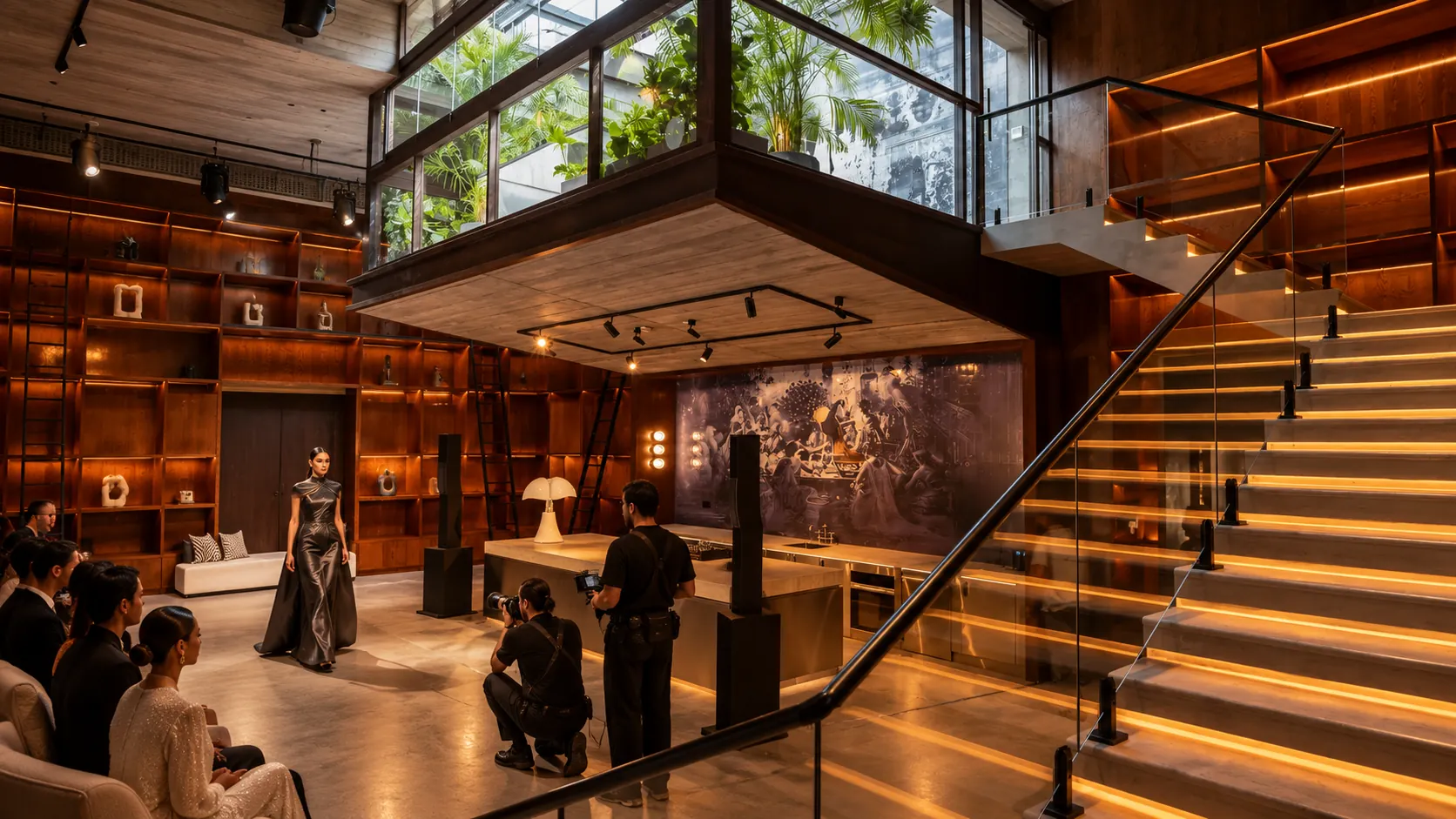
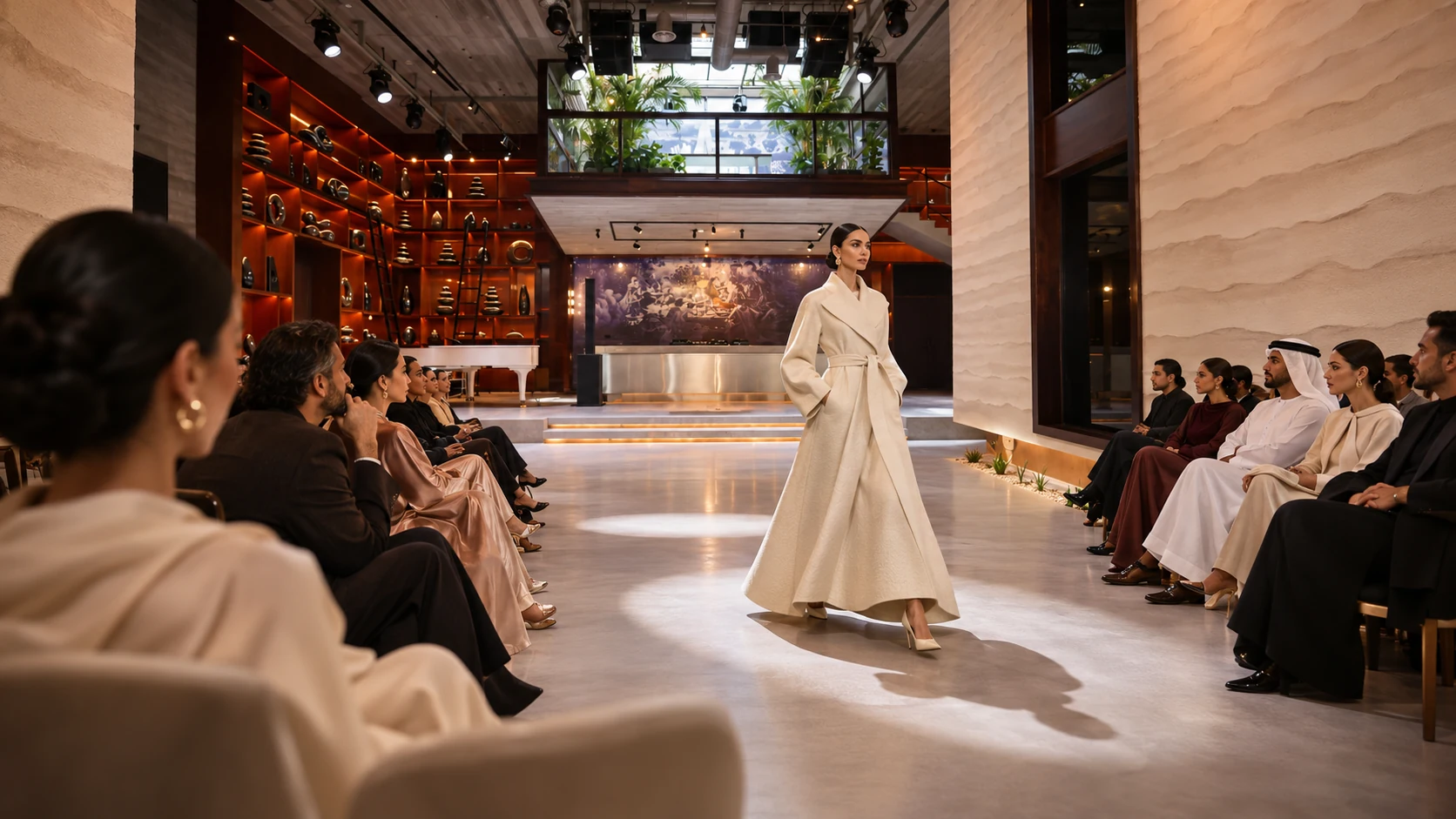
Rows look orderly on a drawing, but the friction appears when the person in the second row watches at actual eye height, and the front row fills up. Put the planned chairs in place and watch someone take the walk from the last chair in a row. Test any seat beside a pillar. Check where the eye loses the hem during the turn. When the guest needs to lean into an aisle to follow the movement, shift the chair into the next sightline gap or change the seat count.
When the site visit includes a sample coat, take a photo from the least favorable seat at the point where the model turns. The photo records the garment at the guest’s eye level beside the planned chair position. Choose one seat to drop if moving a row would narrow a walkway. Label the test photo on the plan so the crew setting chairs sees exactly which viewing angle the producer approved.
The runway’s end may look like the natural press position until the producer puts a camera and an operator in the space and checks the adjacent seats. Ask the photographer to use the intended lens and frame a moving model at the far end, then repeat the shot at the turn. Test a full-length frame first. If the operator needs to retreat into a guest route for the long look, change the position or the lens and check the new view from the nearest seat.
The British Fashion Council’s production brief for its 2026–27 London shows lists distinct requirements for photographers’ positions and audience access. For a smaller show in Dubai, reserve the camera’s footprint on the floor plan and check the guest route with the photographer working. Allocate a position for any invited creator who needs vertical footage. The producer can then decide where handheld guest filming fits the plan.
The model’s route back to the dressers deserves a walk of its own, since the quickest entrance can create a queue if returning models meet the next group at the same doorway. For productions with several looks per model, run a full loop at show pace and time the return from the turnaround point to the garment rail. Time the costume change with the assigned shoes. If the change overtakes the music cue, shift the running order or assign the close-timed pieces to different models.
Backstage access for a show at the House refers to the production route and working areas agreed in the venue proposal for that date. Agree on where dressers can set their rails and where models can change in private. Garment covers need a place away from the walking line, and the person releasing models needs a useful view of the entrance point. Request those areas in the event proposal so the plan reflects the space assigned for your date. Keep invited press on the guest side unless the designer and venue approve a specific route and time for coverage.
If the rail is close to the model queue, dressers need enough space to pull the next garment clear while the outgoing model waits for a cue. Put a filled rail in the agreed location at rehearsal and check the gap with someone actually wearing the fullest piece. Move the queue or choose a different staging point if fabric brushes the rail. The proposed route needs venue approval at the width the crew will use on show day.
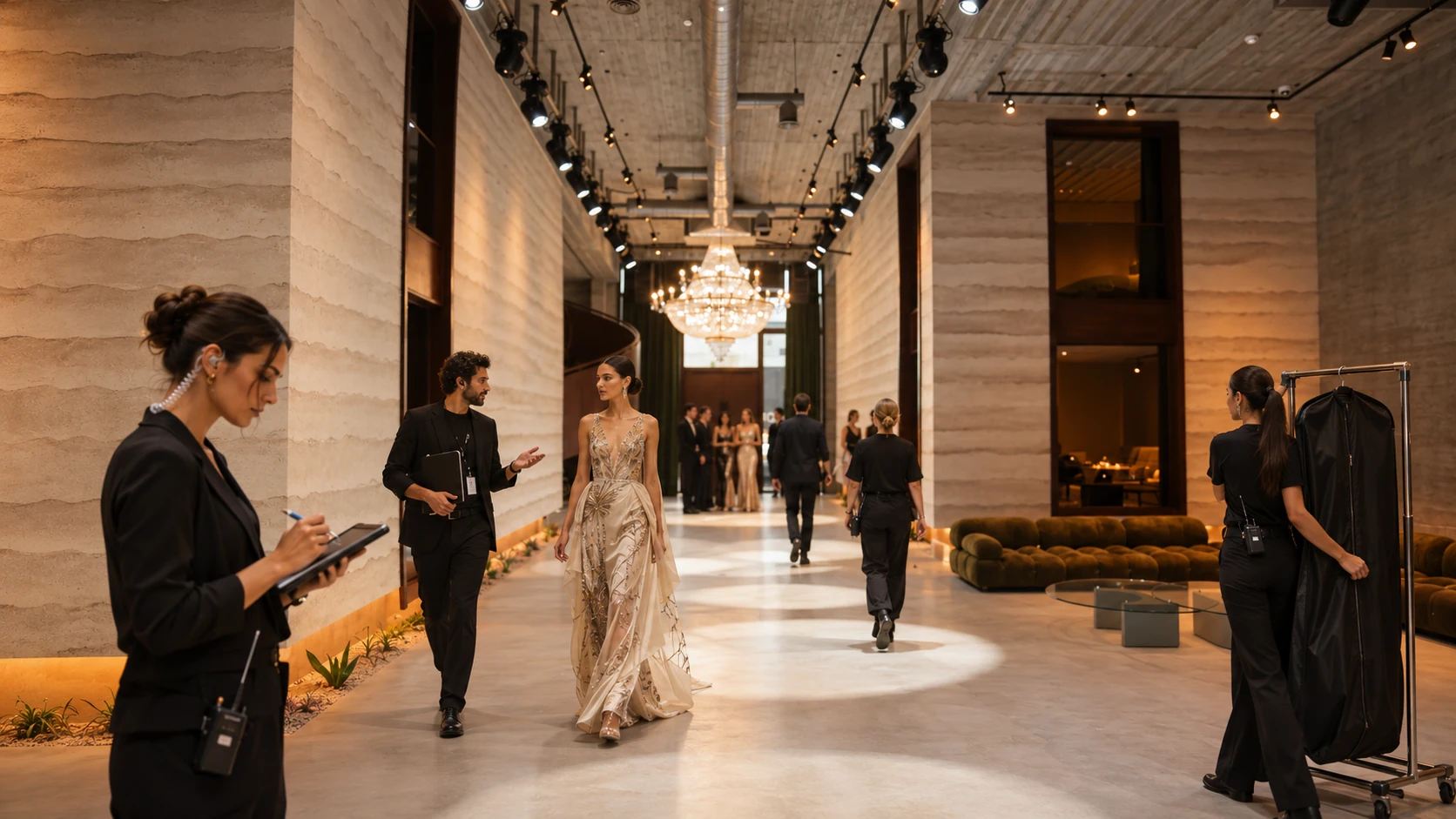
If a fastening holds up a model as the music cue approaches, the person at the release point needs authority to hold the walk. Record the look number and music cue side by side on the running order. When an outfit drops out, the dresser flags it to the release lead and the audio operator receives the agreed hold cue through the show caller. Rehearse that pause once using the people who will work it.
The most useful lighting rehearsal starts with a garment whose color or finish can change across the route, such as pale silk that catches a patch of direct light. Ask the model to walk through the exact path while the lighting operator and photographer watch the same pass. Review footage at the entrance and at the turn. The first look may need a smaller adjustment near the entry than it does at the point where cameras expect a full-length frame.
Someone’s House lists installed audiovisual and lighting systems on its fashion events page and includes standard support for those systems in its full-day reservation. Agree on who will program the show cues and what the production requires beyond that scope. If the entrance is dark to protect the first look, rehearse the point where the spot picks up the model, and check the walking surface with the venue team. Review the plan with the dressers if a garment changes how far ahead its wearer can see.
Late arrivals need a route to their seats when a guest reaches the entrance as the first model waits for a cue. Set a holding point for agreed late arrivals and name the person who releases guests to their seats. If check-in and garment delivery need to use part of the same route, agree on their access times with the venue. Ask the crew to move the final cases out of the guest path by the time the host opens the doors.
The House’s booking terms specify setup and teardown within the agreed hours, so load-in time should be on the same schedule as the final cue. Verify the approved layout and exit routes with the House. Dubai’s Department of Economy and Tourism lists the event permit process for registered organizers and companies. Confirm with the organizer and venue which approvals apply to the proposed show. If press interviews continue after the walk, put them on the same schedule so crew know when they can start collecting equipment.
Use the late-arrival rehearsal to test how the door team signals an open seat when a model approaches the point where the two paths meet. Run that handoff with the soundtrack at its actual volume, so staff can try the signal they will use in public. Seat a late guest at the agreed pause if the route is open. Any temporary sign or barrier belongs on the approved layout so the door team knows where to place it.
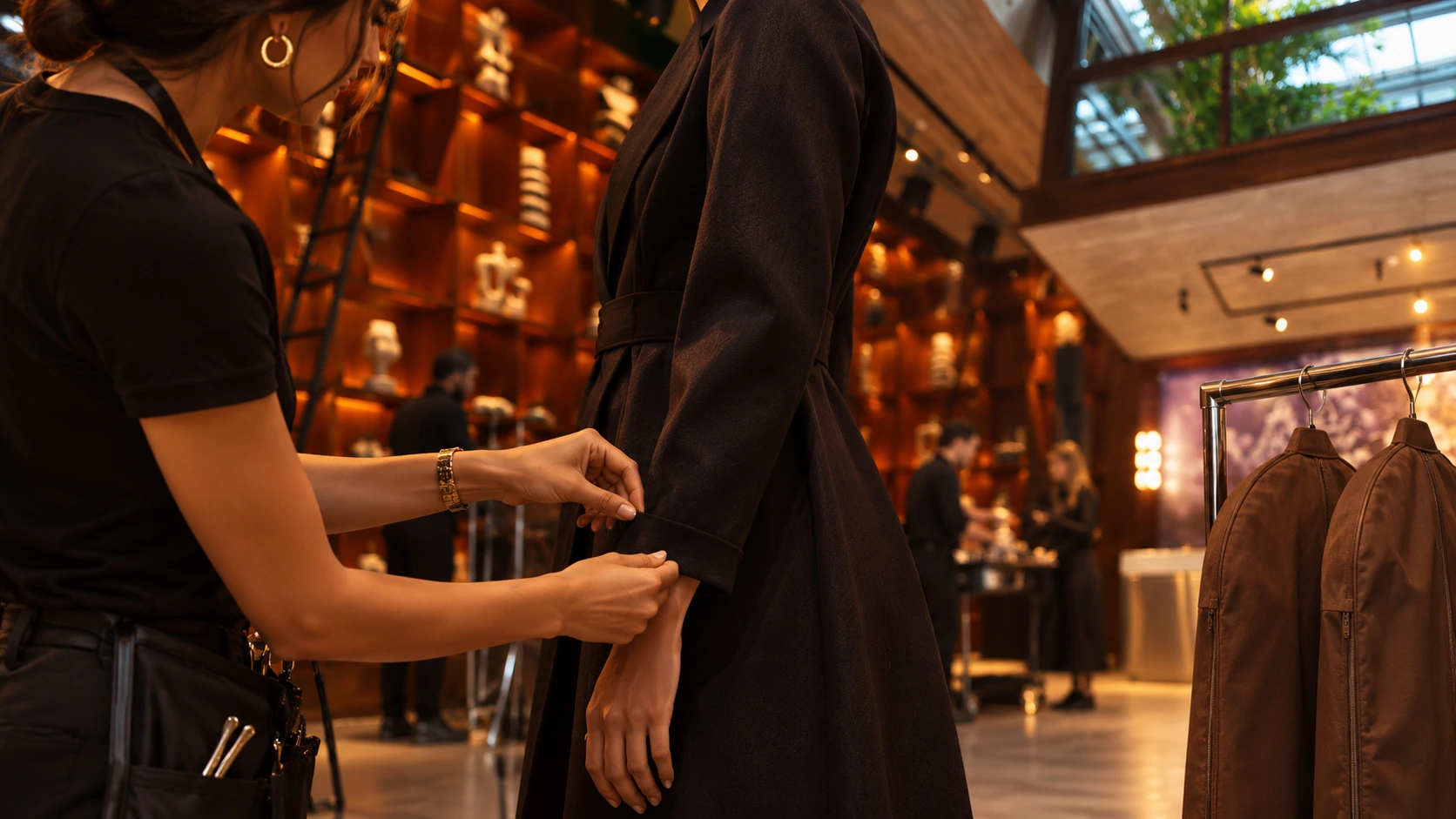
The venue proposal starts with the planned runway and an estimated guest count, so show where the camera crew expects to work on your draft floor plan. Someone’s House hosts invitation-only fashion events on Al Khayat Avenue in Al Quoz, and the available event areas depend on the agreed-upon format. Share the areas your crew needs for garment preparation and note any changes that require immediate access to a dresser. Record both the first garment rail’s arrival and the planned handover in the brief.
Once the date and guest estimate are ready, use the Someone’s House booking page to ask for an exclusive full-day proposal. If you have two seating options, submit both and explain which looks need an unobstructed view down to the floor. Review the camera positions and production access during the visit, then record the agreed setup in the event plan. Save the photographed sightline from the hardest seat, along with the approved plan, for the production team.