Blog


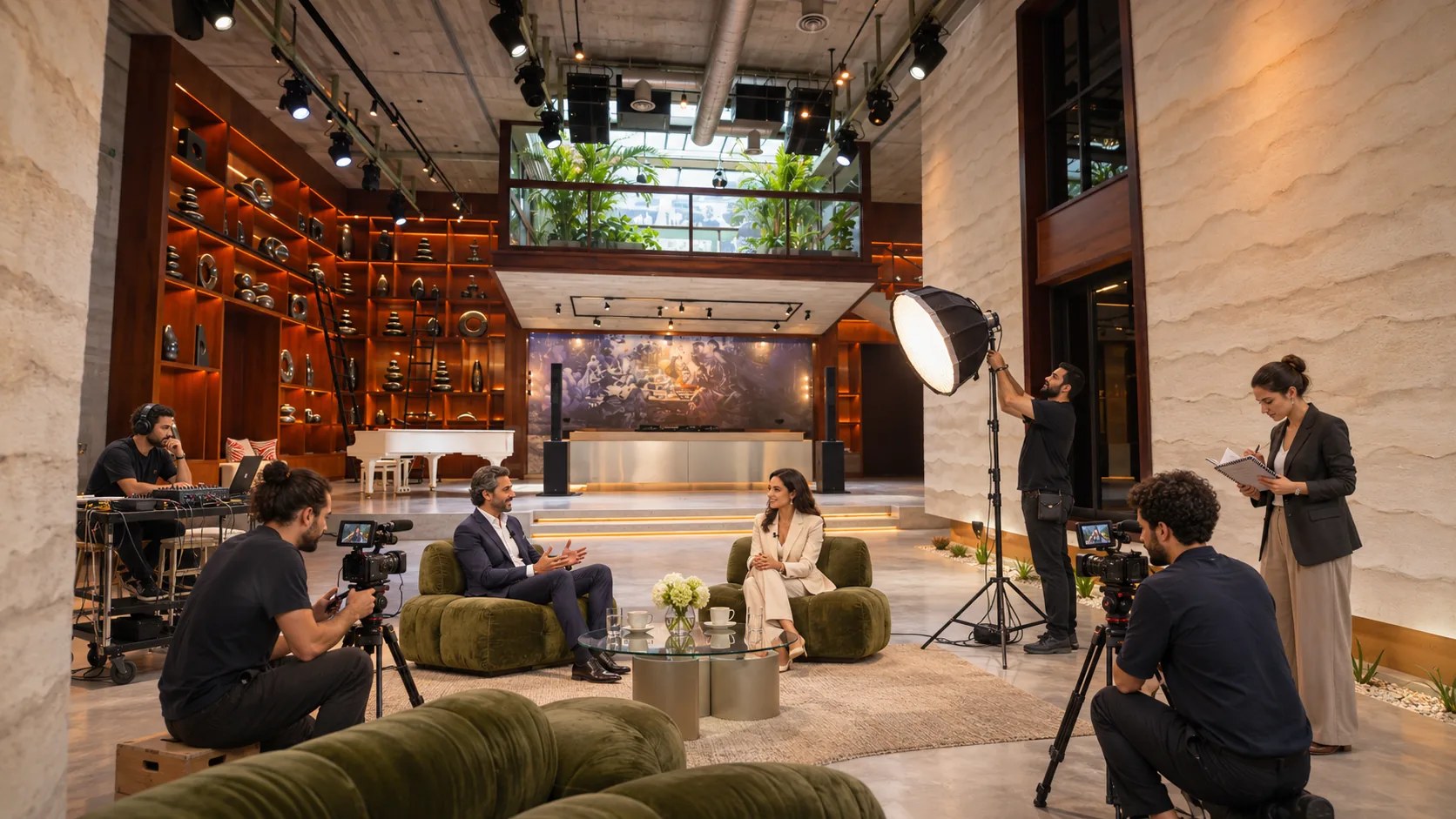
Choose a video podcast venue in Dubai with camera tests and speech checks. Plan a private recorded interview at Someone’s House with your production team.
The venue looks right in a photograph, but your interview producer still needs to hear a recorded voice and see the actual camera view. For a video podcast venue in Dubai, the site visit deserves a short production test alongside the conversation concerning access. Someone’s House accommodates private media sessions in Al Quoz, with a residential interior available for a conversation arranged around your guests. Choose the recording position against the episode you intend to release, then agree on the people responsible for producing it.
Your producer needs to know how the finished interview will be watched, since a long conversation and a short company film require different material. In a full video podcast, viewers usually follow the host’s questions alongside the guest’s answers. For a profile film, the editor may use selected answers with supporting footage. Agree on the intended format while the location remains a choice, so the site visit tests the views your editor actually needs.
If the release includes vertical extracts, ask the camera operator to assess those compositions during the visit alongside the main horizontal view. Two speakers seated far apart may fit comfortably in a wide shot while requiring separate close-up views for individual extracts. Explain which speaker needs to appear in a promotional clip and whether captions will occupy part of the image. The crew can then reserve suitable space around the person in the proposed composition.
Someone’s House’s existing article on podcasts with invited guests addresses audience participation during events and considers questions from listeners. Here, the production decision concerns a recorded interview centered on the speakers and the working crew. If your episode includes an audience, review its participation as a separate requirement when discussing the booking.
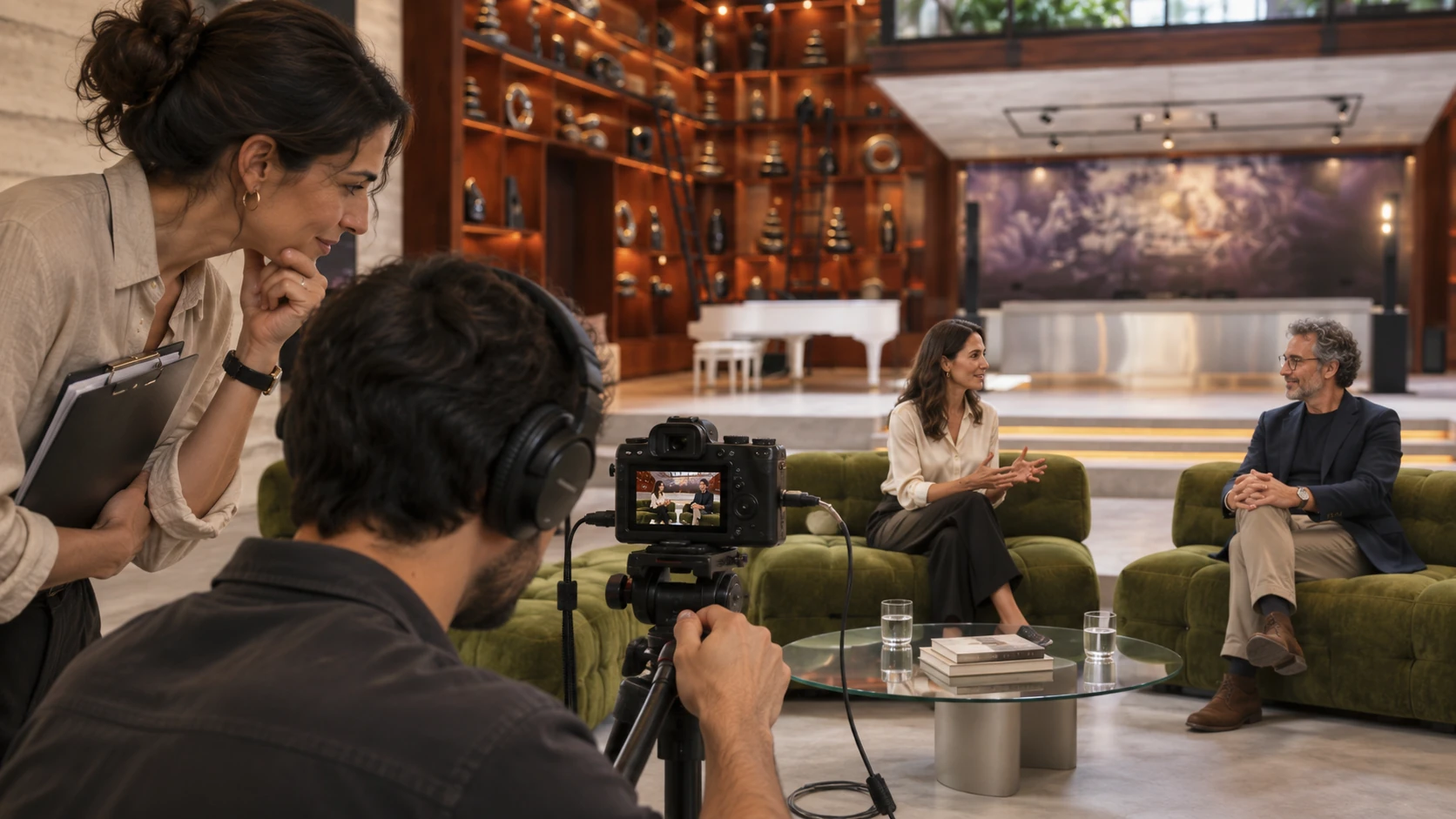
The most useful location photograph is taken from the intended camera position, with a colleague occupying the speaker’s proposed seat. Look at the objects visible near the person’s head and the space behind their shoulders. Inside an attractive venue, the camera composition still needs to suit the conversation. For a founder’s interview, a restrained view of the residential setting may convey the intended tone with minimal additional decoration.
Carnegie Mellon University’s interview filming advice recommends a background relevant to the subject and the removal of distracting clutter from the composition. On the visit, ask the operator to compare the wider view with a closer shot. Approval to move furniture belongs to the venue team. Photograph the agreed arrangement for the production crew, then identify which decorative objects need to remain in the same position throughout the recording.
For a conversation filmed with two cameras, the director needs compatible views of the speakers as they look toward one another. CMU’s advice explains how consistent eyelines help viewers follow an interview as the camera angles change. Review a sample cut between your proposed views. Camera positions need enough operating space for the crew while preserving the venue’s approved access routes.
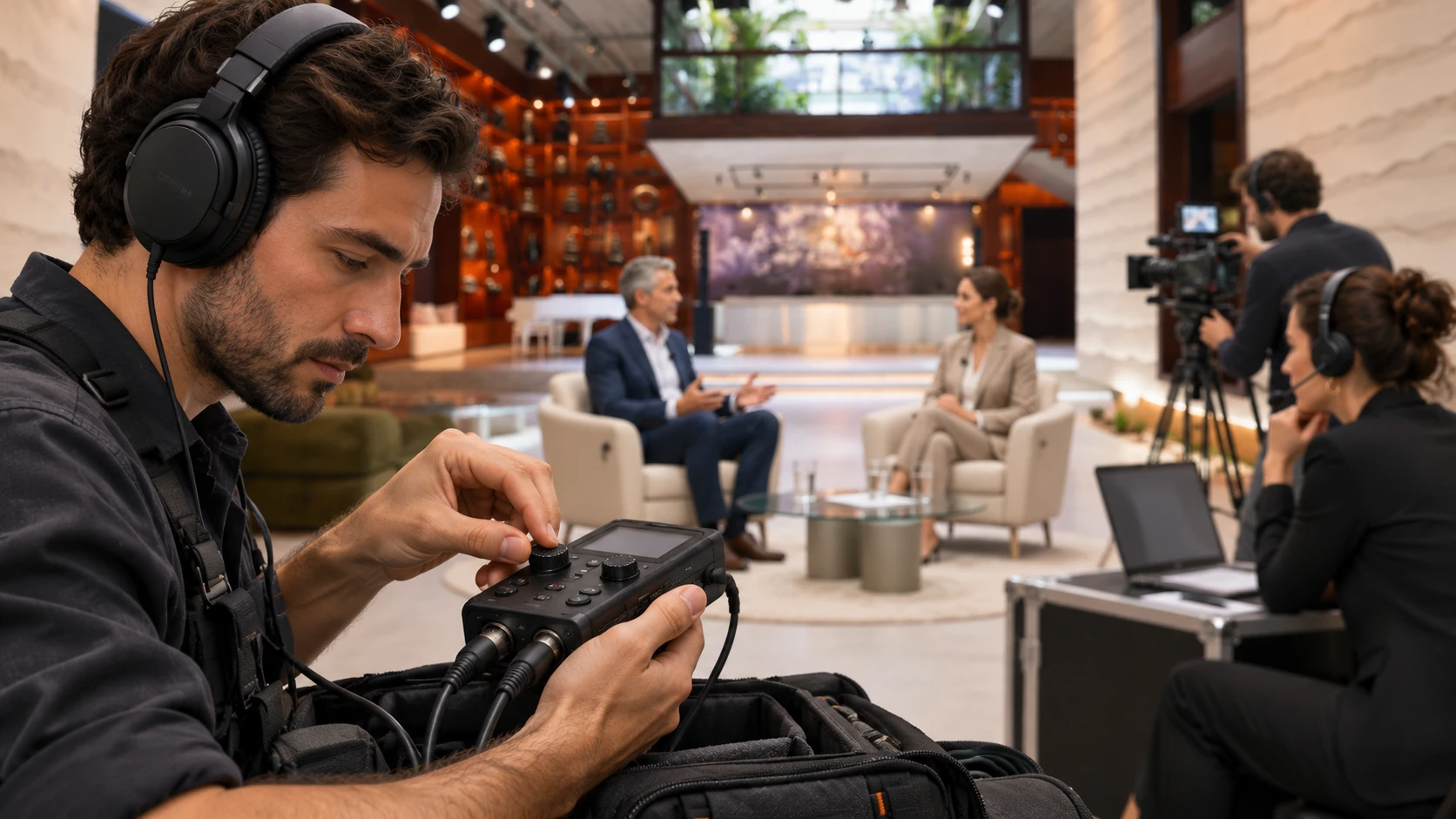
Your sound check needs an actual spoken exchange in the chosen seats, with the microphones positioned as they will be during the interview. Have both speakers face their conversation partner and move as they naturally would during an answer. Listen back through the recording operator’s headphones. If a voice changes noticeably when the speaker turns, the operator needs to reassess microphone placement before the main interview.
Shure’s podcast recording advice recommends using a close microphone technique and conducting a test recording, which the operator monitors through headphones to assess the sound. The appropriate distance requires the operator’s judgment for the selected microphone. Ask for a sample containing an ordinary answer followed by a louder passage, so the technician can assess the recording level. Keep the test file available for comparison if the seating or microphone arrangement changes.
During the location visit, listen for activity that is likely to coincide with the proposed recording hours, particularly movement near the interview position. Ask the venue how deliveries and hospitality preparation will be coordinated around the session. Only the venue team operates the building systems. Any request affecting ventilation needs their review, with guest comfort considered alongside the recording requirements.
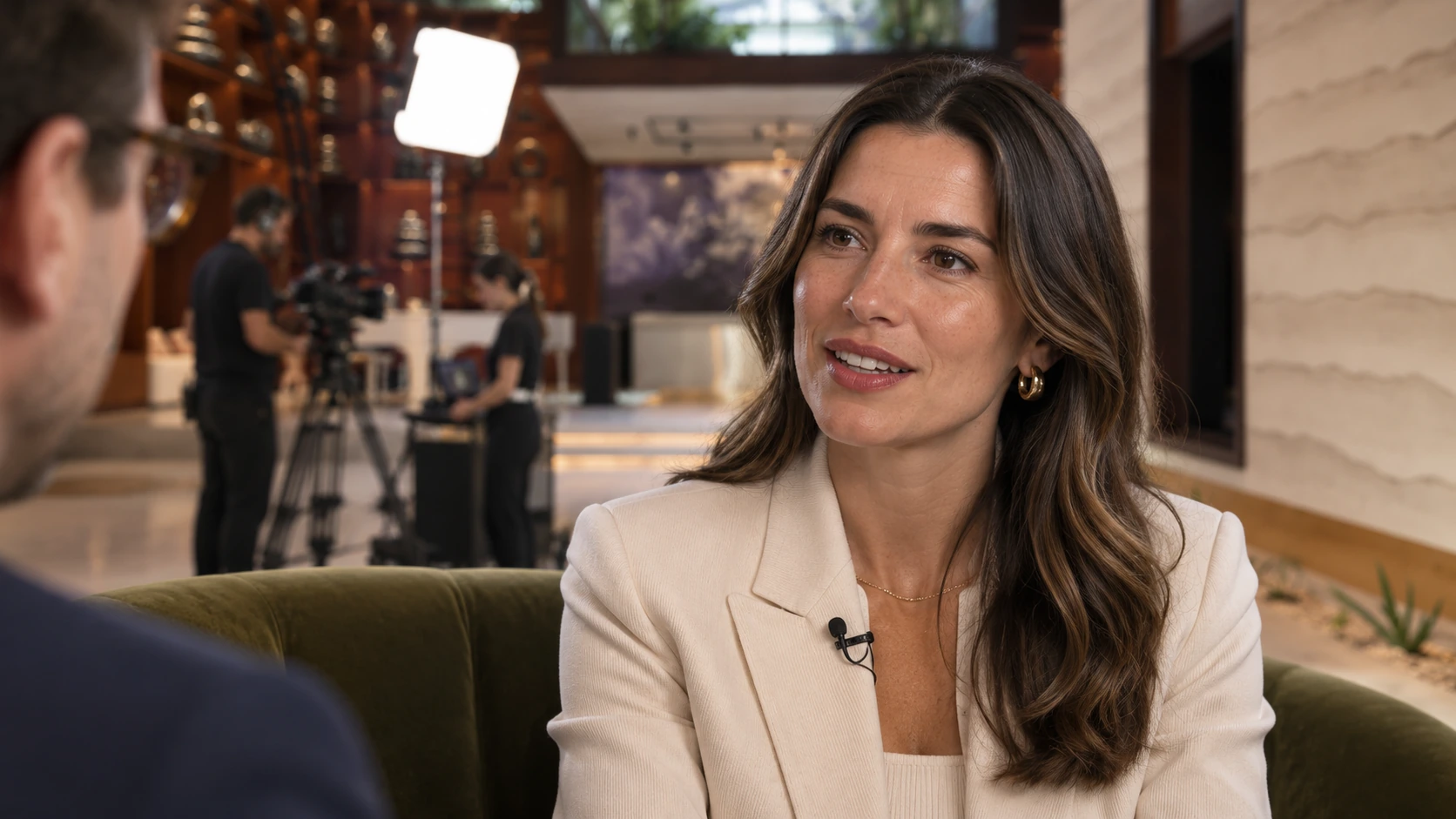
The camera test requires the expected lighting conditions, especially if daylight will reach the speaker during a conversation that runs through part of the afternoon. Ask the operator to review the face alongside the visible background in the same shot. If a bright window dominates the image, discuss an alternative camera position or an agreed-upon lighting adjustment. Record the proposed treatment so the crew arrives with a shared plan for the session.
For a guest wearing glasses, test their normal speaking posture while the camera operator checks for light visible across the lenses. Check the guest’s clothing on camera when a detailed fabric pattern will occupy much of the closer view. The producer can request a suitable alternative during preparation if the recorded test shows a distracting result. Leave time for those checks ahead of the guest’s interview slot.
If the episode includes a product demonstration during the interview, rehearse the actual hand movement in the proposed light and camera view. The viewer needs to see the relevant detail while the guest explains it. Reserve a closer shot for an object whose label or mechanism carries information essential to the answer. Confirm permission to film any material supplied for the demonstration.
Your venue discussion needs the complete working period, which runs from crew arrival until the equipment has been packed for departure. Someone’s House’s booking information describes a finite reservation and private guest access. Include the producer’s preparation requirement in the requested hours. The guest’s interview appointment belongs inside that working period, with the set ready when the guest arrives.
Someone’s House’s current venue terms require advance approval and staff inspection for external equipment, with setup and teardown included in the reserved hours. Send the proposed equipment list for review through the agreed booking contact. Confirm which items the production team supplies and which venue equipment has been allocated to your session. Technical personnel need the same approved list when preparing the shoot.
Separate the venue booking from the production crew’s agreed responsibilities in the written proposal, particularly when an external videographer will handle the recording. Name the person responsible for sound and the person who approves the camera views. If one crew member covers both duties, discuss how monitoring continues during the interview. Requested editing belongs in the proposal alongside the recording work.
The guest’s preparation brief needs the interview’s subject and intended audience, with enough context to prepare relevant examples from their own work. Share the main discussion areas ahead of the recording. In the preparation call, identify any detail requiring factual confirmation or permission from another party. The host can then develop questions supported by the guest’s actual knowledge.
On arrival, allow the guest to try the proposed interview seat while the crew checks their natural posture and microphone placement. The interviewer’s position needs to feel comfortable for a sustained conversation. If the finished film will use answers independently, explain how a reply can retain the relevant question’s context. For a full podcast exchange, preserve the host’s question where the answer relies on its wording.
If several interviews share the same production day, leave usable time between appointments for the crew to check the previous recording and prepare the next speaker. Check the camera view after a change in seating or clothing. Agree where the next guest waits with the venue team so that conversation remains separate from the active recording area.
The editor’s delivery requirements should be agreed upon ahead of the shoot, especially when the commission includes separate camera files alongside the finished program. Request the audio files needed for the planned edit and identify who receives the recorded material. Confirm the transfer method with the production company. Storage arrangements and the retention period should be included in the same agreement, particularly when the interview contains unreleased company information.
After the recording, review a saved sample that includes both speakers, while the guest remains available for any essential pickup requested by the producer. The producer needs to check the actual saved material, with particular attention to an answer containing a name or date. Note any passage awaiting confirmation for the editor. For a correction, retain enough surrounding context to fit the conversation when the final version is assembled.
W3C’s caption advice explains how synchronized text conveys speech and meaningful sounds for viewers who rely on captions, and how automatic text is checked for accuracy. Include caption review in the release schedule alongside the video approval. The guest’s name and specialist vocabulary deserve comparison with the agreed spelling. Name the person authorized to approve the finished episode and its proposed promotional extracts.
Someone’s House supports private media sessions within its house-format venue, so your recording brief can begin with the conversation and the setting it needs. Send the intended date through the House booking page, with the proposed guest count and recording duration. Include the crew’s access requirements in the same request. The team can then review the proposed session against the available booking period and confirmed production arrangements.